Teraphim
Household gods — small enough for Rachel to sit on, big enough for Michal to pass off as David asleep in bed.
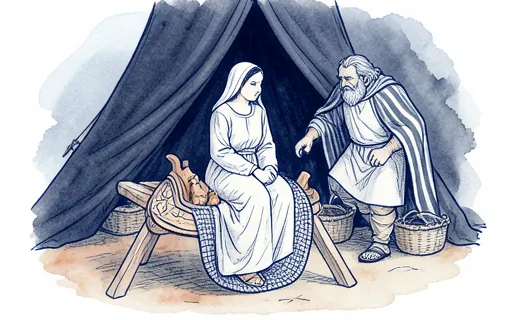
Teraphim are images kept in the household, and the stories about them tell you more about their size than their shape. Rachel steals her father's and hides them under her in a camel saddle, pleading that she cannot get up. Michal puts one in David's bed with goats' hair at its head so that Saul's men will think he is ill. They were consulted as well as kept: the king of Babylon, choosing which road to take, shakes arrows, consults the teraphim and looks at a liver, and Zechariah says flatly that the teraphim speak nonsense. Josiah clears them out of Judah with the mediums and the idols. Hosea names them alongside the ephod as things Israel will do without, which is one reason the two are thought to have been used together.
Disputed. The Hebrew word is always plural and its origin is uncertain. They are clearly household images, but whether they are ancestor figures or household gods is disputed, and an older theory linking them to inheritance rights, drawn from tablets found at Nuzi, is now widely doubted.
Where it appears
See also
- Ephod — Named together in Judges and Hosea