2 Timothy
Paul’s farewell from prison as he faces death: guard the gospel, endure hardship, hold to the Scriptures and come quickly.
Overview
2 Timothy presents itself as Paul’s last letter. He is in chains “as a criminal” (2:9) in Rome, where Onesiphorus had to search hard to find him (1:17). Most of his companions have gone, and he expects to die soon: “For I am already being offered, and the time of my departure has come” (4:6). He writes to Timothy, “my beloved child” (1:2), urging him not to be ashamed of the gospel or of Paul, and to “stir up the gift of God which is in you” (1:6). Timothy is to hand on the teaching to “faithful men who will be able to teach others also” (2:2).
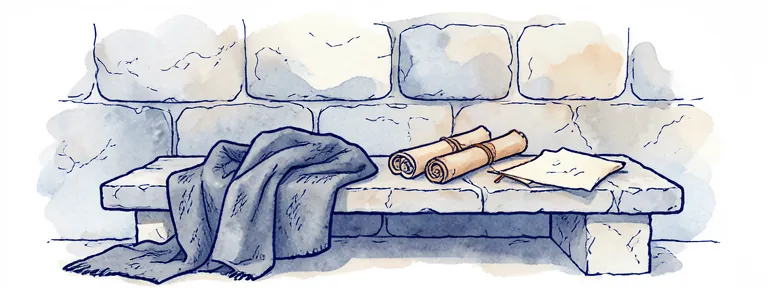
He pictures the work through a soldier, an athlete and a farmer (2:3–6). He warns of “grievous times” ahead (3:1) and of teachers who say “the resurrection is already past” (2:18), and he points Timothy to the Scriptures he has known from infancy (3:15). The letter ends with one of Paul’s best-known lines, “I have fought the good fight. I have finished the course. I have kept the faith” (4:7), followed by ordinary requests: bring Mark, bring the cloak left at Troas “and the books, especially the parchments” (4:13), and come “before winter” (4:21).
Author and date
The letter names Paul as its author, writing from prison to Timothy (1:1–2). It is one of the three Pastoral Epistles (1 and 2 Timothy and Titus, letters to individuals caring for churches), whose authorship is widely debated.
Traditional view
Paul wrote during a second Roman imprisonment, shortly before his execution under Nero, as early tradition reports. The many personal details, from names and a cloak and books left behind to a first hearing at which no one stood by him (4:16), are read as the marks of a genuine letter.
Academic view
Most academic scholars think that 2 Timothy, like 1 Timothy and Titus, was written after Paul’s death, presenting his last testament to a later church. A significant minority think 2 Timothy is more likely than the other two to be Paul’s own, or to contain genuine notes of his, because its personal material is so extensive.
Both views read 2 Timothy as a farewell address, like Moses’ speeches in Deuteronomy or Paul’s words to the Ephesian elders in Acts 20, in which a leader facing death hands on his charge.
Audience and setting
Timothy seems to be in the province of Asia, perhaps still at Ephesus (1:18), where Paul is sending Tychicus (4:12). Paul reports that “all who are in Asia turned away from me” (1:15), names individuals who deserted or opposed him, and asks Timothy to come to him. Timothy’s faith, he recalls, “lived first in your grandmother Lois and your mother Eunice” (1:5).
Genre, and how to read it
Read 2 Timothy as a personal letter, warmer and more urgent than 1 Timothy. Its instructions are fewer and its feelings nearer the surface: gratitude, loneliness, trust and a clear sense of an ending. Some of its most loved lines come out of that setting, such as “God’s word isn’t chained” (2:9).
The statement that “Every Scripture is God-breathed and profitable for teaching” (3:16) is central to Christian teaching on the inspiration of Scripture. In its setting “Scripture” refers to the Jewish Scriptures Timothy learned as a child (3:15). Christians of different traditions apply it to the whole Bible and understand inspiration in different ways, from the inspiration of every word to broader accounts of God working through human authors.
Only Luke is with me
2 Timothy is Paul’s last letter, written in chains in Rome, and it is crowded with people. It names twenty of them around him, and many are somewhere else: nine have left, been sent away or been left behind. At my first defense, no one came to help me, but all left me
(2 Tim 4:16). Only Luke is with me
, he writes, and asks Timothy to come before winter
and bring Mark.
Turned away or left him
-
PhygelusAsia
all who are in Asia turned away from me, of whom are Phygelus and Hermogenes
(2 Tim 1:15) -
HermogenesAsia
Phygelus and Hermogenes
(2 Tim 1:15) -
DemasThessalonica
Demas left me, having loved this present world
(2 Tim 4:10)
Opposed him
-
Alexander the coppersmith
Alexander the coppersmith did much evil to me
(2 Tim 4:14)
Gone or sent away to work
-
CrescensGalatia
Crescens to Galatia
(2 Tim 4:10) -
TitusDalmatia
Titus to Dalmatia
(2 Tim 4:10) -
TychicusEphesus
I sent Tychicus to Ephesus
(2 Tim 4:12)
Left behind on the way
-
CarpusTroas
the cloak that I left at Troas with Carpus
(2 Tim 4:13) -
ErastusCorinth
Erastus remained at Corinth
(2 Tim 4:20) -
TrophimusMiletus
I left Trophimus at Miletus sick
(2 Tim 4:20)
With him in Rome
-
LukeRome
Only Luke is with me
(2 Tim 4:11) -
EubulusRome
Eubulus salutes you
(2 Tim 4:21) -
PudensRome
Pudens
(2 Tim 4:21) -
LinusRome
Linus
(2 Tim 4:21) -
ClaudiaRome
Claudia
(2 Tim 4:21)
Sent for
-
Timothy
Be diligent to come to me soon
(2 Tim 4:9) -
Mark
Take Mark and bring him with you, for he is useful to me
(2 Tim 4:11)
Remembered with thanks
-
OnesiphorusRome and Ephesus
he often refreshed me, and was not ashamed of my chain
(2 Tim 1:16)
Greeted
-
Prisca
Greet Prisca and Aquila
(2 Tim 4:19) -
Aquila
Prisca and Aquila
(2 Tim 4:19)
Demas and Luke once sent greetings side by side, Luke the beloved physician and Demas greet you
(Col 4:14) and Demas, and Luke, my fellow workers
(Phm 1:24); now one has gone and one stays. Mark is the man Paul once refused to take, someone who had withdrawn from them in Pamphylia
(Acts 15:38), and now asks for by name. Though only Luke is with him, four more send greetings from Rome, it seems local believers rather than fellow travellers. Against all the absences the letter sets one presence: But the Lord stood by me and strengthened me
(2 Tim 4:17).
Outline
- 1:1–1:5 Greeting and thanks — Lois, Eunice and Timothy’s faith
- 1:6–1:18 Do not be ashamed — Guard what was entrusted; loyal Onesiphorus
- 2:1–2:13 Endure hardship — Soldier, athlete, farmer; a faithful saying
- 2:14–2:26 An approved workman — Handling the word, avoiding quarrels
- 3:1–3:17 The last days — Grievous times, and the Scriptures
- 4:1–4:8 The final charge — Preach the word; the good fight
- 4:9–4:22 Requests and greetings — Mark, the cloak, the parchments, “before winter”
Key themes
- Not ashamed
- “Yet I am not ashamed, for I know him whom I have believed” (1:12).
- The trust handed on
- “That good thing which was committed to you, guard through the Holy Spirit who dwells in us” (1:14).
- Endurance
- “You therefore must endure hardship as a good soldier of Christ Jesus” (2:3).
- Scripture
- The holy Scriptures “are able to make you wise for salvation through faith which is in Christ Jesus” (3:15).
- The finished course
- Beyond death, Paul says, “the crown of righteousness is stored up for me” (4:8), and for all who have loved Christ’s appearing.
At a glance
Most mentioned: Jesus Christ, Onesiphorus, Alexander, Aquila, Claudia
Main places: Ephesus, Antioch (Pisidia), Asia, Corinth, Dalmatia