Πράξεις Ἀποστόλων
Praxeis Apostolon, “acts of the apostles”.
Narrative history. 28 chapters, 1,007 verses.
The story of the first Christians, from Jesus’ ascension in Jerusalem to Paul preaching in Rome, as the message spreads “to the uttermost parts of the earth.”
Acts picks up where Luke ends. Its author refers back to “The first book I wrote, Theophilus” (1:1), and the risen Jesus gives what reads as the book’s plan: “You will be witnesses to me in Jerusalem, in all Judea and Samaria, and to the uttermost parts of the earth” (1:8). After Jesus’ ascension the Spirit comes at Pentecost, a Jewish harvest festival, and Peter preaches. The church in Jerusalem grows under pressure from the temple authorities, until the death of Stephen scatters the believers through Judea and Samaria (8:1).
Saul, the persecutor, meets the risen Jesus on the road to Damascus and becomes Paul, the apostle to the Gentiles (non-Jews). Peter’s visit to the Roman centurion Cornelius, and a council in Jerusalem in chapter 15, settle that Gentile believers need not be circumcised. From chapter 13 Paul takes over the story: three journeys around the eastern Mediterranean, arrest in Jerusalem, hearings before governors and a king, a shipwreck and at last Rome. There he spends two years under guard, teaching “with all boldness, without hindrance” (28:31).
Author and date
Acts, like Luke, is anonymous and addressed to Theophilus. In several passages the narrator switches from “they” to “we” (16:10–17, 20:5–21:18, 27:1–28:16), as if he joined Paul on those stretches.
Traditional view
Luke, Paul’s companion · c. AD 62
From the 2nd century the church named Luke, the physician who travelled with Paul, as the author of both volumes, and read the “we” passages as his own record of the journeys. Many who hold this view date Acts to about AD 62. The book ends with Paul alive and awaiting trial, and says nothing of his death, the persecution under Nero or the fall of Jerusalem.
Academic view
Unknown author · c. AD 80–90, some later
Many academic scholars date Acts after Luke’s Gospel and so after AD 70, and some place it in the early 2nd century. They note tensions with Paul’s letters, for example over his visits to Jerusalem (compare chapter 15 with Galatians 2). They read the “we” passages either as a source the author used or as a storytelling habit of ancient sea-voyage accounts. Others accept Luke as the author with a later date.
Both views treat Acts as the second volume of a two-part work that begins with the Gospel of Luke, and many scholars on both sides credit its author with accurate knowledge of the Roman world’s officials, roads and sea routes.
Audience and setting
Like the Gospel, Acts is written for Theophilus and a wider, largely Gentile readership. It explains how a movement that began among Jews in Jerusalem came to include Gentiles across the empire, and it repeatedly shows Roman officials finding no crime in Paul. Its story covers about thirty years, from around AD 30 to the early 60s, and its map runs from Jerusalem through Syria, Asia Minor (modern Turkey), Macedonia and Greece to Rome.
Genre, and how to read it
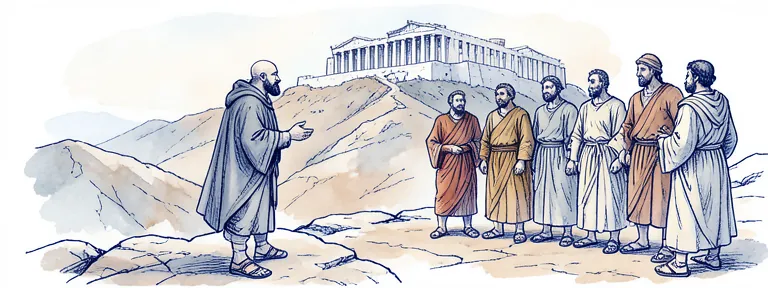
Acts is history written in the ancient manner, with speeches at the key moments: Peter at Pentecost, Stephen before the council, Paul in the synagogue at Pisidian Antioch, in Athens and in his own defence. The narrative moves outward in stages, and the author closes several of them with a short report on the growth of the word, the message about Jesus (6:7, 9:31, 12:24, 16:5, 19:20).
Two figures carry the book, Peter in chapters 1–12 and Paul in 13–28, and their stories run in parallel: both heal a lame man, both are freed from prison, both raise the dead. Acts ends with Paul still waiting for trial. Readers have explained the open ending as a sign of an early date, as a deliberate close on the gospel reaching Rome, or as the author’s choice to leave Paul’s death untold. The book also survives in two forms. One, known as the Western text and found in the ancient manuscript Codex Bezae, is nearly a tenth longer than the text most translations follow.
From Peter to Paul
Acts opens as Peter’s story and closes as Paul’s. Peter is named 56 times, every one of them in chapters 1–15; Paul, first as Saul, 151 times, from the stoning of Stephen to the closing scene in Rome. And three times the narrator stops saying “they” and says “we”: he is travelling with Paul.
16:10–17immediately we sought to go out to Macedonia … Following Paul and us
20:5–21:18were waiting for us at Troas … Paul went in with us to James
27:1–28:16that we should sail for Italy … When we entered into Rome
Counted in the site’s Greek: Peter as Petros, Paul as Paulos or Saul, in either spelling. The Saul at 13:21 is the king and is left out, and so is “Simon”, which Acts uses for three different men. After 13:9 Paul is “Saul” only when he retells his conversion and quotes what was said to him (22:7, 22:13, 26:14).
Toward Jerusalem, and out from it
Luke walks toward Jerusalem and Acts walks out of it. The two books name the city 90 times between them, Luke 31 and Acts 59, out of 139 in the whole New Testament. Luke opens in the temple, as Zacharias goes in to burn incense (Luke 1:9), and closes there, the disciples continually in the temple (Luke 24:53). Acts opens in the city and ends in Rome.
Luke 31
123456789101112131415161718192021222324
GalileeThe roadJerusalem
12345
Acts 59
12345678910111213141516171819202122232425262728
JerusalemJudea, SamariaThe ends of the earth
6789
Luke 9:51he intently set his face to go to Jerusalem
Counted in the site’s Greek, in both spellings: Ierousalem, the Hebrew form, and Hierosolyma, the Greek one. Matthew, Mark and John almost always write Hierosolyma (33 of 35); Luke writes Ierousalem 27 times out of 31, and Acts mixes the two. The stages under Acts are its own three from 1:8, but the bars show the story going back: Paul is in the city again for the council in chapter 15 and is arrested there in chapter 21, and in chapter 25 Festus asks him whether he will go up to be tried there.
Paul’s journeys, side by side
Acts follows Paul on four journeys: three that set out from Antioch (13:2–4; 15:36–40; 18:23) and one he made under guard (27:1). Measured on one scale, the voyage to Rome was nearly all at sea, while the second and third journeys covered the most ground. The longest stays are in two cities: a year and a half in Corinth and more than two years in Ephesus.
by land
by sea
not said
Corinth ? implied, not named
distances in straight lines between stops
Journey
Acts
km
miles
Places
By sea
First journey
Acts 13–14
2,000
1,240
10
50%
Second journey
Acts 15:36–18:22
3,650
2,270
17
41%
Third journey
Acts 18:23–21:17
3,580
2,230
17
40%
To Rome, a prisoner
Acts 27–28
2,970
1,850
12
94%
Each journey goes back over its ground
On the first journey Paul and Barnabas come back through Lystra, Iconium and Pisidian Antioch, “strengthening the souls of the disciples” (14:21–22). Paul begins the second by setting out to “visit our brothers in every city” (15:36). Much of the distance goes on returning, not on new places.
The voyage to Rome
Almost the whole journey is at sea: a coastal ship to Myra, an Alexandrian ship to Crete, fourteen nights adrift (27:27), three months wintering on Malta (28:11) and a second Alexandrian ship to Puteoli. The last stretch is overland, and believers come out from Rome to meet him (28:15).
Where Acts is silent
Acts names a region where it does not name a city: “Galatia and Phrygia” (18:23), “the upper country” (19:1), “Macedonia” and “Greece” (20:1–2). Those legs are drawn straight between the next stops the text does name, so they are the most understated.
Outline
In Jerusalem (1–7)
1:1–1:26
The ascension — The promise of the Spirit, and Matthias chosen
2:1–2:47
Pentecost — The Spirit comes, Peter preaches, about three thousand baptised
3:1–5:42
The church in Jerusalem — A lame man healed, arrests, Ananias and Sapphira
6:1–7:60
Stephen — The seven chosen, Stephen’s speech and death
Judea and Samaria (8–12)
8:1–8:40
Philip — Samaria, and the Ethiopian official
9:32–11:18
Peter and Cornelius — The Gentiles receive the Spirit
11:19–12:25
Antioch — Believers first called Christians, Peter freed from prison
To the ends of the earth (13–28)
13:1–14:28
Paul’s first journey — Cyprus and southern Galatia
15:1–15:35
The council in Jerusalem — Gentile believers and the law of Moses
15:36–18:22
Paul’s second journey — Philippi, Thessalonica, Athens, Corinth
18:23–21:16
Paul’s third journey — Ephesus, farewell to the elders, the road to Jerusalem
21:17–26:32
Arrest and trials — A riot at the temple, hearings before Felix, Festus and Agrippa
27:1–28:31
To Rome — Storm, shipwreck on Malta, and Paul in Rome
Key themes
The Holy Spirit
The Spirit drives the story, from Pentecost, when “They were all filled with the Holy Spirit” (2:4), to the sending of Barnabas and Saul (13:2) and the council’s letter: “it seemed good to the Holy Spirit, and to us” (15:28).
Jews and Gentiles
Peter’s discovery that “God doesn’t show favoritism” (10:34) and the council in Jerusalem open the church to Gentiles, while Paul goes first to the synagogue in almost every city.
The church
The first believers “continued steadfastly in the apostles’ teaching and fellowship, in the breaking of bread, and prayer” (2:42) and shared their possessions. At Antioch “The disciples were first called Christians” (11:26).