Zechariah
Night visions encourage the builders of the second temple, and later prophecies look ahead to a humble king, a pierced one and the day when Yahweh will be King over all the earth.
Overview
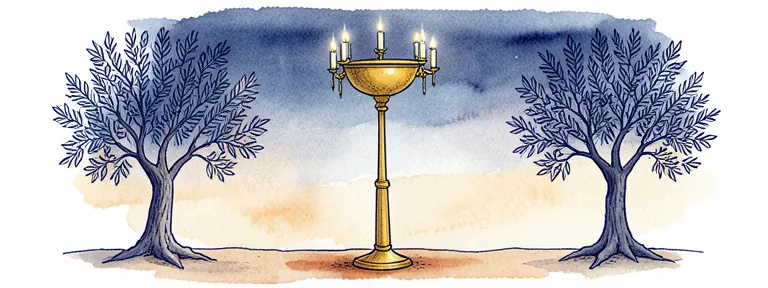
Zechariah began to prophesy in 520 BC, two months after Haggai (1:1), with a call to the people to return to God and a promise that he would return to them (1:3). Three months later he saw eight visions in one night (1:7): horsemen patrolling the earth, horns and craftsmen, a man measuring Jerusalem, the high priest Joshua given clean clothes, a golden lampstand between two olive trees, a flying scroll, a woman in a basket carried off to the land of Shinar, and finally four chariots. An angel explains each one. At their centre is God’s word to Zerubbabel: “Not by might, nor by power, but by my Spirit” (4:6).
A question about fasting two years later (7:1) brings a call to justice and a picture of Jerusalem at peace, its streets “full of boys and girls playing” (8:5) and the nations seeking God. Chapters 9–14 change style. They contain two undated oracles, or prophetic messages, each headed “A revelation” (9:1, 12:1). A king comes to Zion “lowly, and riding on a donkey” (9:9); a shepherd is paid off with “thirty pieces of silver” (11:12); Jerusalem mourns for one “whom they have pierced” (12:10); and at the last “Yahweh will be King over all the earth” (14:9).
Author and date
The book names Zechariah son of Berechiah, son of Iddo (1:1), from a priestly family that returned from Babylon (Nehemiah 12:16). Whether he wrote chapters 9–14 is the main question.
Traditional view
Zechariah wrote the whole book, chapters 1–8 during the rebuilding and chapters 9–14 later in his life, which would account for the change of style and subject. Holders of this view point to themes shared by both halves: Jerusalem, the nations, cleansing and a coming king.
Academic view
Most academic scholars attribute chapters 1–8 to Zechariah and treat 9–14 as separate collections, often called Second Zechariah and sometimes divided again at chapter 12. Proposed dates range from before the exile to the Greek period. The mention of Greece in 9:13 is one reason many place them in the 5th century BC or later. The heading “A revelation” also opens Malachi, and some see the three collections as a related group.
Both views recognise that the two halves differ. Chapters 1–8 have dates, visions and named leaders; chapters 9–14 have none of these and look further into the future.
Audience and setting
Zechariah spoke to the same community as Haggai: returned exiles in Jerusalem, a small province of the Persian empire, rebuilding the temple under Zerubbabel the governor and Joshua the high priest. Chapters 9–14 speak to a people still waiting for the promises of the first half. The nations around them, from Damascus and Tyre to Philistia, are drawn into God’s purposes.
Genre, and how to read it
Zechariah is eleventh in the Twelve, the shorter prophets gathered on one scroll in the Hebrew Bible, and with Hosea the longest of them. Its visions are some of the most symbolic writing in the Old Testament, close in style to the visions of Daniel and Revelation. The prophet sees something strange and asks what it means, and an angel explains. The explanations do not settle every detail, and readers still debate many of them.
- 1:1 Eighth month, second year of Darius
- 1:7 The night visions
- 7:1 Fourth year of Darius
- 9:1 First “revelation”
- 12:1 Second “revelation”
The Gospels draw heavily on chapters 9–14 in telling the last week of Jesus’ life: the entry to Jerusalem on a donkey (Matthew 21:5, John 12:15), the thirty pieces of silver (Matthew 27:9–10), the sheep scattered when the shepherd is struck (Mark 14:27), and the pierced one (John 19:37). In the book’s closing scene even the bells on the horses are inscribed “HOLY TO YAHWEH” (14:20).
In the reign of Darius
Work on the temple stopped until the second year of the reign of Darius
(Ezra 4:24), and that is the year both prophets date their words. Haggai’s five messages fall within four months; Zechariah starts between them and goes on two years longer. Ezra dates the end: the house finished in Darius’ sixth year.
-
year 2 · month 6 · day 1
Build the house
Is it a time for you yourselves to dwell in your paneled houses, while this house lies waste?
Hag 1:1 -
year 2 · month 6 · day 24
Work begins
they came and worked on the house of Yahweh of Armies
Hag 1:15 -
year 2 · month 7 · day 21
The latter glory
The latter glory of this house will be greater than the former
Hag 2:1 -
year 2 · month 8
Return to me
Return to me
Zech 1:1 -
year 2 · month 9 · day 24
From today, a blessing
From today I will bless you
Hag 2:10 -
year 2 · month 9 · day 24
Zerubbabel, a signet ring
will make you like a signet ring, for I have chosen you
Hag 2:20 -
year 2 · month 11 · day 24
Visions in the night
I had a vision in the night
Zech 1:7 -
year 4 · month 9 · day 4
Should we still fast?
Should I weep in the fifth month
Zech 7:1 -
year 6 · Adar · day 3
The house is finished
This house was finished
Ezra 6:15
Dates as the text gives them, by year of Darius, month and day. Zechariah 1:1 gives no day, so its mark fills the month. Haggai 2:20 gives only the day; “the second time” puts it on the same day as 2:10, and they share a mark. Darius’ second year is 520 BC, and the house was finished in 515.
Outline
Visions for the builders (1–8)
- 1:1–1:6 Return to me — A call to learn from the ancestors who would not listen
- 1:7–1:21 Horsemen, horns and craftsmen — The first two night visions
- 2:1–2:13 The measuring line — Jerusalem without walls, and God dwelling within
- 3:1–4:14 Joshua and the lampstand — The high priest cleansed, and Zerubbabel strengthened by the Spirit
- 5:1–6:8 Scroll, basket and chariots — Wickedness removed, and God’s patrols sent out
- 6:9–6:15 The crowning — A crown for Joshua, and the man called the Branch who will build the temple
- 7:1–8:23 Fasting and feasting — Justice demanded, Jerusalem restored, and the nations seeking God
Two oracles (9–14)
- 9:1–11:17 The king and the shepherds — A humble king, a flock betrayed, and thirty pieces of silver
- 12:1–14:21 That day — Jerusalem besieged and cleansed, the pierced one mourned, Yahweh King over all
Key themes
- Return
- “Return to me,” says God, “and I will return to you” (1:3). The former prophets said the same, and the fathers did not listen (1:4).
- God’s Spirit
- The temple will be finished “Not by might, nor by power, but by my Spirit” (4:6).
- Justice
- “Execute true judgment, and show kindness and compassion every man to his brother” (7:9). Fasting matters less to God than how people treat one another.
- The coming king
- The Branch will build the temple (6:12), and Zion’s king comes “righteous, and having salvation; lowly, and riding on a donkey” (9:9).
- The nations
- Ten men from every language will take hold of a Jew’s robe and say, “We will go with you, for we have heard that God is with you” (8:23), and the nations will keep the feast of booths in Jerusalem (14:16).
At a glance
Most mentioned: Joshua, David, Zechariah, Zerubbabel, Darius
Main places: Jerusalem, Egypt, Assyria, Babylon, Ekron
In the Almanac: Pieces of silver