Zephaniah
The day of Yahweh is near for Judah and the nations, but a humble remnant will be hidden, and God will rejoice over his people with singing.
Overview
Zephaniah prophesied “in the days of Josiah” (1:1). His book opens with judgement on a cosmic scale: “I will utterly sweep away everything from the surface of the earth” (1:2). The sweep narrows to Judah and Jerusalem. It targets those who worship Baal and “the army of the sky on the housetops” (1:5), officials in foreign clothes, and complacent men “settled on their dregs” who think God will do nothing (1:12). The day of Yahweh, when God comes to judge, will be “a day of wrath, a day of distress and anguish” (1:15). Those words gave the medieval hymn Dies irae its opening.
Chapter 2 calls the humble to seek Yahweh: “It may be that you will be hidden in the day of Yahweh’s anger” (2:3). It then turns to the nations on every side: Philistia to the west, Moab and Ammon to the east, Cush to the south and Assyria to the north, whose capital Nineveh will become “a desolation” (2:13). Jerusalem, “the oppressing city” (3:1), is no better. Then the tone changes completely. God will purify the lips of the peoples (3:9), leave a humble people who trust him (3:12), and rejoice over Zion “with singing” (3:17).
Author and date
The book names Zephaniah and traces his ancestry back four generations to a Hezekiah (1:1), possibly the king, which would make the prophet a member of the royal house.
Traditional view
Zephaniah wrote the whole book early in Josiah’s reign, before the king’s reform of 622 BC. The worship of Baal and of the stars that Zephaniah condemns is what Josiah later swept away (2 Kings 23).
Academic view
Most academic scholars trace much of chapter 1 and parts of chapters 2–3 to Zephaniah in Josiah’s reign, and see the book as expanded later. The promises of gathering and restored fortunes at its close (3:14–20) are often dated to the exile or after.
Both views set Zephaniah’s preaching in the reign of Josiah (640–609 BC), after the long reign of Manasseh and before the ministry of Jeremiah was well under way.
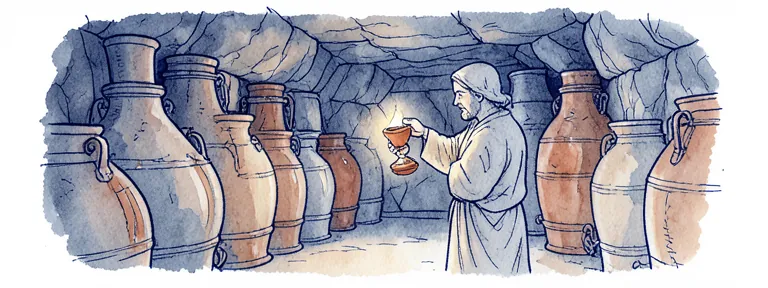
Audience and setting
Zephaniah spoke to Jerusalem in the 7th century BC, after decades in which the worship of other gods had flourished in the city. Assyria was weakening and would fall within a generation; Babylon had not yet risen. The book knows the city closely, naming the fish gate, the second quarter and Maktesh (1:10–11).
Genre, and how to read it
Zephaniah is ninth in the Twelve, the shorter prophets gathered on one scroll in the Hebrew Bible. It follows a pattern found in many prophetic books: judgement on God’s people, judgement on the nations, and salvation beyond both. The phrase “the day of Yahweh” and its variations hold it together.
Look for the reversals. The opening sweep of man, animal, birds and fish (1:3) lists the creatures of Genesis 1 in reverse order, as though creation were being undone. At the end, when God purifies the lips of the peoples so “that they may all call on Yahweh’s name” (3:9), many readers hear the scattering at Babel reversed. The prophet’s name, “Yahweh has hidden,” echoes the hope of 2:3 that the humble may be hidden on the day of wrath.
The day of Yahweh
“The day of Yahweh”, the day God comes in judgement, is named 16 times in the Old Testament, every one of them in the prophets, and 5 of them in Joel. Again and again it is near
or at hand
. Amos turns the hope on its head, telling those who long for it that it is darkness, and not light
.
- Isaiah 2
- Ezekiel 1
- Joel 5
- Amos 3
-
Obadiah 1
- 1:15
the day of Yahweh is near all the nations
- 1:15
- Zephaniah 3
-
Malachi 1
- 4:5
the great and terrible day of Yahweh
- 4:5
Counted in the site’s Hebrew as yom followed by the divine name. The hollow marks are the Hebrew’s a day for Yahweh, a different turn of phrase that the WEB also renders as Yahweh’s day. Malachi’s is the last in the Old Testament, with Elijah sent before it; at Pentecost Peter quotes Joel’s, before the great and glorious day of the Lord comes
(Acts 2:20).
Outline
- 1:1–1:18 The day of Yahweh on Judah — The earth swept clean, Jerusalem searched with lamps
- 2:1–2:3 Seek Yahweh — A call to the humble before the day comes
- 2:4–2:15 The nations — Philistia, Moab and Ammon, Cush, and Assyria
- 3:1–3:8 The oppressing city — Jerusalem’s leaders who will not listen
- 3:9–3:20 Restoration — Purified lips, a humble remnant, and God’s song over Zion
Key themes
- The day of Yahweh
- “The great day of Yahweh is near. It is near and hurries greatly” (1:14).
- Complacency
- God will search Jerusalem “with lamps” for those who say, in effect, that he makes no difference (1:12).
- Humility
- The humble are called to seek righteousness and humility (2:3), and the people God leaves are “afflicted and poor” and “take refuge in Yahweh’s name” (3:12).
- The nations turn to God
- The same nations that face judgement will one day serve God “shoulder to shoulder” (3:9).
- God’s joy
- “He will rejoice over you with joy. He will calm you in his love. He will rejoice over you with singing” (3:17).