Holy Week
Nine days, from the arrival at Bethany to the empty tomb, and about a third of all four Gospels.
Mark counts the days for us: “the next day”, “in the morning”, “two days before the Passover”, “the Preparation Day, that is, the day before the Sabbath”. The other Gospels fill in what happened inside each one. Each evening Jesus left the city for Bethany or the Mount of Olives, and each morning he came back to teach in the temple. A Jewish day begins at sunset, so the supper, the arrest, the trials, the cross and the burial all fall within one day, the day before the Sabbath. The Gospels do not agree on everything: John puts the anointing earlier and has Jesus die as the Passover lambs were killed, a day ahead of the other three. The drawing follows Mark and notes where the others differ.
- The Temple
- The city
- Outside the walls
- after sunset, the next Jewish day
“Six days before the Passover” John 12:1
- Arrives at Bethany, where Lazarus lives
- Mary anoints his feet
John puts the anointing here; Mark tells it after “two days before the Passover” (Mark 14:1–3).
Night Bethany John 12:1
“On the next day” John 12:12
-
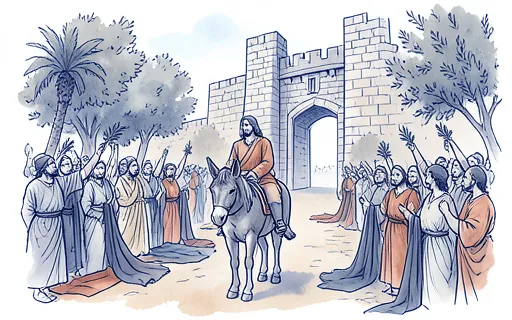 Rides into Jerusalem on a colt
- Looks round at everything in the temple
Night Bethany Mark 11:11
“The next day” Mark 11:12
- Curses the fig tree
- Drives out the traders
Matthew tells the cleansing straight after the entry, on Sunday (Matthew 21:12).
Night Out of the city Mark 11:19
“In the morning” Mark 11:20
- Finds the fig tree withered
- Questioned on authority, taxes, the resurrection; the widow’s two coins
- Foretells the temple’s fall
Night Mount of Olives Luke 21:37
“Two days before the Passover” Mark 14:1
- The chief priests plot to seize him
- Anointed at Simon the leper’s house
- Judas agrees to betray him
No day is named. “Two days before” is counted back from the Passover, so the day is an inference.
Night not stated
“The first day of unleavened bread, when they sacrificed the Passover” Mark 14:12
- Two disciples prepare the upper room
-
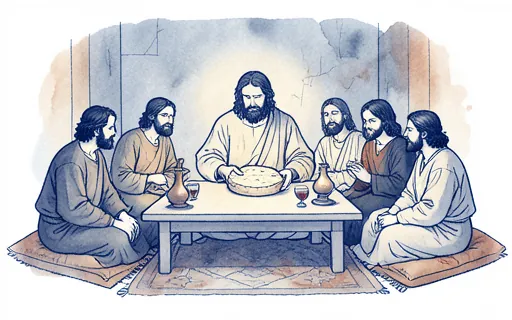 ☾The supper
- ☾The farewell discourse
-
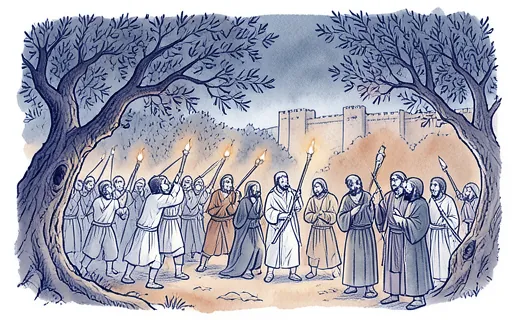 ☾Prayer and arrest in Gethsemane
Night Under arrest Mark 14:53
“The Preparation Day, that is, the day before the Sabbath” Mark 15:42
-
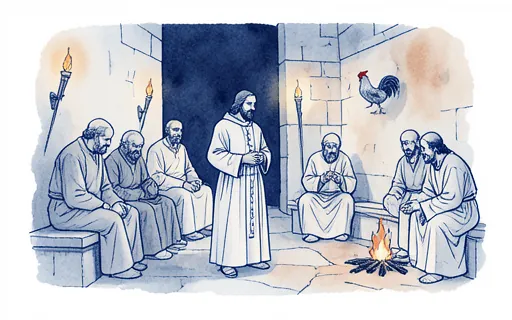 ☾Before Caiaphas and the council; Peter’s denials
-
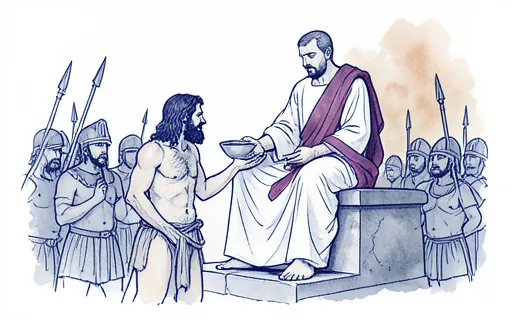 Before Pilate, and in Luke before Herod
- Carries the cross
-
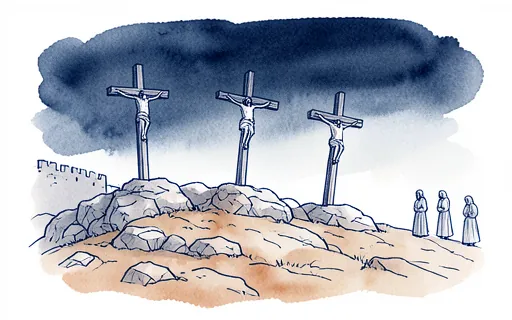 Crucified, dies, is buried
Night The tomb Mark 15:46
“On the Sabbath they rested” Luke 23:56
- The tomb is sealed and guarded
Night The tomb
“Very early on the first day of the week” Mark 16:2
-
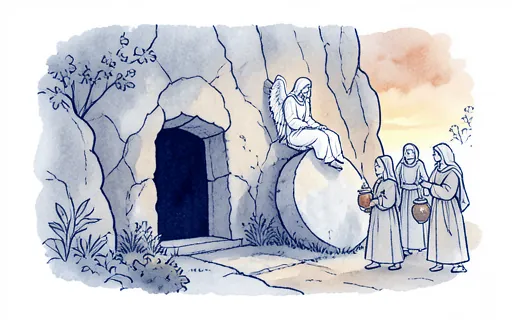 The women find the tomb empty
- Two walk to Emmaus, sixty stadia
- Appears to the disciples that evening
Night not stated
Friday, sunset to sunset
As a Jewish day, Friday begins at sunset on Thursday, so the supper is its first act. Mark gives the hours, counted from sunrise: crucified at the third hour, darkness from the sixth to the ninth, death at the ninth. The burial had to be finished before sunset began the Sabbath.
The hours are Mark’s, and the clock times beneath them are approximate. A Jewish hour was a twelfth of the daylight, so it was longer in summer than in winter.
Two readings: was the supper the Passover?
Mark, Matthew and Luke: yes. It is eaten on “the first day of unleavened bread, when they sacrificed the Passover” (Mark 14:12).
John: the Passover is still to come on Friday morning. The priests stay out of the Praetorium “that they might eat the Passover” (John 18:28), so Jesus dies on “the Preparation Day of the Passover” (John 19:14), as the lambs are killed.
Two readings: what time was the crucifixion?
Mark: “It was the third hour when they crucified him” (Mark 15:25).
John: Jesus is still before Pilate “at about the sixth hour” (John 19:14). Some explain the gap by different ways of counting the hours, others by the round numbers of an age without clocks.
Two readings: Friday or Wednesday?
Friday is the traditional reading of “the day before the Sabbath” (Mark 15:42), with the Sabbath being the weekly one.
Wednesday or Thursday is argued from “three days and three nights” (Matthew 12:40). On this reading the Sabbath of Mark 15:42 is the feast’s first day, not the weekly Sabbath.
Not a word scripture uses. A reading aid, not a name the text uses. The week is the church's name for the days the Gospels narrate from Jesus' arrival at Bethany to the resurrection.
Disputed. Mark, Matthew and Luke make the supper the Passover meal; John has the Passover still to come on Friday morning (John 18:28). A minority reading puts the crucifixion on Wednesday or Thursday, to fit “three days and three nights” (Matthew 12:40).
Where it appears
See also
- Passover — The feast the week leads up to
- Unleavened Bread — The week that begins with the Passover
- Sabbath — Why the burial could not wait
- Hours of the day — How Mark counts the hours of Friday
- Stadion — Emmaus, sixty stadia from Jerusalem