2 Kings opens with Elijah taken up “by a whirlwind into heaven” (2:11). His successor Elisha carries on with a cycle of miracle stories, including the healing of Naaman, an army commander from Aram. Then the history resumes, reign by reign, through coups, wars and brief revivals.
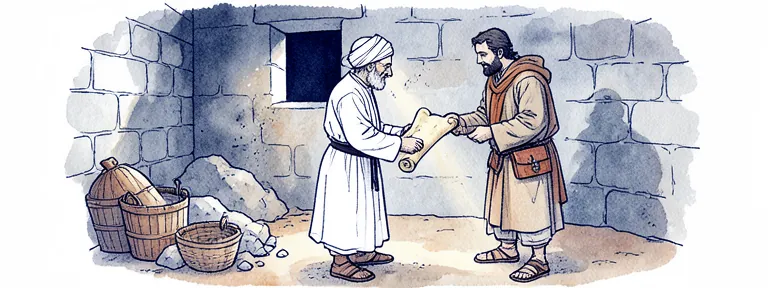
In 722 BC Assyria destroys the northern kingdom and deports its people, and the book stops to explain why (17:7). Judah survives the Assyrian siege under Hezekiah, sinks under Manasseh, and is reformed under Josiah after “the book of the law” is found in the temple (22:8). It is too late. Babylon takes Jerusalem, burns the temple and carries the people into exile. The book ends on a small note of hope: the exiled king Jehoiachin released from prison and given a place at the Babylonian king’s table (25:27).
Author and date
2 Kings is the second half of one book with 1 Kings, and shares its questions of authorship.
Traditional view
Jeremiah · 6th century BC
Jewish tradition credits Jeremiah; the book’s last chapter matches Jeremiah 52 almost word for word.
Academic view
Late monarchy, revised in the exile · 7th–6th century BC
Most academic scholars see a first edition written under Josiah, whose reform is the book’s high point, and a second edition in the exile that added the fall of Jerusalem.
Many of its events are confirmed outside the Bible: Assyrian inscriptions name Jehu, Menahem, Hoshea and Hezekiah, and Sennacherib’s own account of his siege of Jerusalem survives.
Audience and setting
2 Kings was written for Judah in exile, to explain the catastrophe and to leave a door open to hope. Its setting runs from about 850 to 561 BC, across both kingdoms and out to Assyria, Egypt and Babylon.
Genre, and how to read it
The Elisha stories come first and read differently from the rest: episodic, local and full of wonder. After them the history speeds up, and reigns that lasted decades can take a paragraph.
The key passage is chapter 17, the book’s own verdict on the north. It explains the exile as Deuteronomy’s curses on covenant-breaking coming true, after generations of warnings from prophets. Judah’s fall follows the same logic, but the final verses suggest that God’s promise to David has not been cancelled.
Two kingdoms, side by side
After Solomon the kingdom splits in two (1 Kings 12:16–20), and Kings tells both stories at once, dating each king by the other’s reign. Every reign gets a length and nearly every king a verdict. Laid side by side, the north has nineteen kings in about two hundred and forty years, all but one judged evil, and falls to Assyria. The south has twenty, keeps David’s line, swings between good and evil kings, and lasts about a hundred and thirty years longer.
“right in Yahweh’s eyes”
evil
mixed
no verdict
prophets, by the kings their books name
Kingdom
Kings
Right
Evil
Mixed or none
Years stated
Israel
19
0
17
2
242
Judah
20
8
11
1
394
Nine dynasties against one
Israel’s throne changes family by assassination again and again: Baasha kills Nadab (1 Kings 15:28), Zimri kills Elah and lasts seven days (16:10, 15), and Jehu wipes out Ahab’s house (2 Kings 10). Four of the last six kings are murdered (2 Kings 15:10, 14, 25, 30). Judah keeps David’s line throughout, broken only by Athaliah’s six years (2 Kings 11:3).
The prophets come in the crises
Elijah and Elisha stand against Ahab’s house. Amos, Hosea, Isaiah and Micah all name the same few reigns, from Uzziah and Jeroboam II to Hezekiah, the decades before Samaria falls. Jeremiah begins in Josiah’s thirteenth year and stays to the fall of Jerusalem (Jeremiah 1:2–3).
Two readings: why don’t the sums meet?
Reigns overlapped
Some kings shared the throne with a son, as Jotham did while his father had leprosy (2 Kings 15:5), and the two kingdoms may have counted a king’s first part-year differently. Read that way, the figures fit together and the gap closes.
Figures changed in copying
Numbers are the easiest thing to miscopy, and a few of these synchronisms are hard to fit on any scheme. On this reading some of the figures we have are not the ones first written.
Outline
Elisha (1–8)
1:1–2:25
Elijah taken up — Fire from heaven, the whirlwind, Elisha’s double portion
3:1–8:29
Elisha’s ministry — Oil that does not run out, Naaman healed, Samaria besieged by Aram
The last years of Israel (9–17)
9:1–12:21
Jehu and Joash — Ahab’s house destroyed, and a boy king in Judah
13:1–17:41
The fall of Samaria — Assyria rises, and the northern kingdom is exiled
Judah alone (18–25)
18:1–20:21
Hezekiah — Sennacherib’s siege and Isaiah’s word
21:1–23:30
Manasseh and Josiah — The worst king, and the book of the law found
23:31–25:30
The fall of Jerusalem — Babylon, the temple burned, Jehoiachin released
Key themes
Why the exile happened
The book’s explanation is covenant unfaithfulness: Israel “feared other gods” (17:7) despite prophet after prophet.
The prophetic word
Events unfold “according to Yahweh’s word” spoken through the prophets (24:2), and the prophets act as God’s voice to kings who will not listen.
Reform
Hezekiah “trusted in Yahweh” (18:5) and Josiah turned to him “with all his heart” (23:25); good kings delay judgement but do not undo generations of wrong.
A thread of hope
The released king eating at Babylon’s table (25:29) leaves the line of David alive at the book’s close.