Ezra
The exiles return from Babylon, rebuild the temple despite opposition, and are called back to the law by Ezra the scribe.
Overview
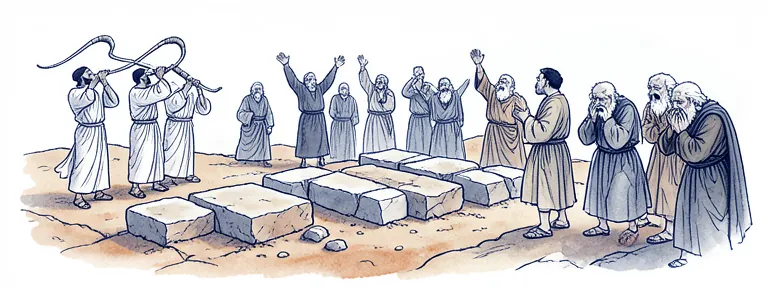
Ezra begins where Chronicles ends, with Cyrus of Persia allowing the Jews to return and rebuild the temple (1:1). The first half covers two decades. It tells of the return under Sheshbazzar and Zerubbabel and the altar and foundations laid amid shouting and weeping (3:11). Opposition from neighbouring peoples halts the work, but the temple is finally completed “in the sixth year of the reign of Darius” (6:15), in 515 BC.
Then the story jumps forward about sixty years to Ezra himself, “a skilled scribe in the law of Moses” (7:6), who leads a second group from Babylon with the king’s backing. He finds that many returnees, including leaders, have married women from surrounding peoples, and he prays in shame (9:6). The book ends with the community resolving to dissolve those marriages.
Author and date
Ezra and Nehemiah are one book in the Hebrew Bible. Parts of Ezra are written in the first person as Ezra’s own memoir (chapters 7–9). Other parts, including copies of royal letters, are in Aramaic, the official language of the Persian empire (4:8–6:18 and 7:12–26).
Traditional view
Jewish tradition credits Ezra with the book, and with Chronicles, drawing on his memoir and on official documents.
Academic view
Most academic scholars see Ezra–Nehemiah as compiled some time after the events from Ezra’s and Nehemiah’s memoirs, lists and Persian documents. Scholars also debate the date of Ezra’s arrival: “the seventh year of Artaxerxes” (7:7) may mean 458 BC, before Nehemiah, or 398 BC, after him.
Both views take the Aramaic letters as closely reflecting the style of real Persian administrative documents.
Audience and setting
Ezra was written for the Jews of Persian Judah, a small province around Jerusalem surrounded by other peoples. It shows them their story as a new exodus and warns them about losing their identity. The setting runs from Babylon to Jerusalem, 538–458 BC or later.
Genre, and how to read it
The book is built from documents: decrees, letters to and from the Persian court, and long lists of returning families. These give it an official, almost archival feel, and show a Persian empire that, unlike Babylon, let subject peoples keep their temples.
Readers find the ending hard. Some point out that, in the book’s view, the dissolution of mixed marriages was about faithfulness rather than ethnicity: Israel’s earlier history had shown intermarriage leading kings and people to other gods. Others read the books of Ruth and Jonah, with their sympathetic foreigners, as a counterweight within scripture.
One return, two lists
Ezra 2 and Nehemiah 7 give the same list of those who came back from Babylon with Zerubbabel, family by family and town by town, and both end The whole assembly together was forty-two thousand three hundred sixty
(Ezra 2:64; Nehemiah 7:66). Add up either list, though, and it comes to far less, and the two lists differ in 19 of their 41 lines.
Line by line
| Family or town | Ezra 2 | Nehemiah 7 | Difference |
|---|---|---|---|
| Families | |||
| Parosh | 2,172 2:3 | 2,172 7:8 | |
| Shephatiah | 372 2:4 | 372 7:9 | |
| Arah | 775 2:5 | 652 7:10 | −123 |
| Pahath-moab | 2,812 2:6 | 2,818 7:11 | +6 |
| Elam | 1,254 2:7 | 1,254 7:12 | |
| Zattu | 945 2:8 | 845 7:13 | −100 |
| Zaccai | 760 2:9 | 760 7:14 | |
| Bani / Binnui | 642 2:10 | 648 7:15 | +6 |
| Bebai | 623 2:11 | 628 7:16 | +5 |
| Azgad | 1,222 2:12 | 2,322 7:17 | +1,100 |
| Adonikam | 666 2:13 | 667 7:18 | +1 |
| Bigvai | 2,056 2:14 | 2,067 7:19 | +11 |
| Adin | 454 2:15 | 655 7:20 | +201 |
| Ater, of Hezekiah | 98 2:16 | 98 7:21 | |
| Bezai | 323 2:17 | 324 7:23 | +1 |
| Jorah / Hariph | 112 2:18 | 112 7:24 | |
| Hashum | 223 2:19 | 328 7:22 | +105 |
| Gibbar / Gibeon | 95 2:20 | 95 7:25 | |
| Towns | |||
| Bethlehem and Netophah | 179 2:21–22 | 188 7:26 | +9 |
| Anathoth | 128 2:23 | 128 7:27 | |
| Azmaveth | 42 2:24 | 42 7:28 | |
| Kiriath Arim / Jearim, Chephirah and Beeroth | 743 2:25 | 743 7:29 | |
| Ramah and Geba | 621 2:26 | 621 7:30 | |
| Michmas | 122 2:27 | 122 7:31 | |
| Bethel and Ai | 223 2:28 | 123 7:32 | −100 |
| Nebo | 52 2:29 | 52 7:33 | |
| Magbish | 156 2:30 | no such line | only in Ezra |
| Families | |||
| the other Elam | 1,254 2:31 | 1,254 7:34 | |
| Harim | 320 2:32 | 320 7:35 | |
| Towns | |||
| Lod, Hadid and Ono | 725 2:33 | 721 7:37 | −4 |
| Jericho | 345 2:34 | 345 7:36 | |
| Senaah | 3,630 2:35 | 3,930 7:38 | +300 |
| Priests | |||
| Jedaiah | 973 2:36 | 973 7:39 | |
| Immer | 1,052 2:37 | 1,052 7:40 | |
| Pashhur | 1,247 2:38 | 1,247 7:41 | |
| Harim | 1,017 2:39 | 1,017 7:42 | |
| Temple staff | |||
| Levites | 74 2:40 | 74 7:43 | |
| singers | 128 2:41 | 148 7:44 | +20 |
| gatekeepers | 139 2:42 | 138 7:45 | −1 |
| temple servants and Solomon’s servants | 392 2:58 | 392 7:60 | |
| Without records | |||
| could not prove their family | 652 2:60 | 642 7:62 | −10 |
Neither book says who the remaining eleven or twelve thousand were. Readers have suggested people from tribes other than Judah and Benjamin, those who could not show their fathers’ houses
(Ezra 2:59), or women and children; others point out that numbers in copied lists drift. The figure sets out the sums and leaves the question open.
Both lists add the same male servants and their female servants
, 7,337, and the same horses, mules, camels and donkeys; the singing men and women are 200 in Ezra (2:65) and 245 in Nehemiah (7:67).
Lines are paired by name: Nehemiah has Hariph for Jorah and Gibeon for Gibbar, joins Bethlehem and Netophah into one line (Ezra 2:21–22 gives 123 and 56) and has no Magbish. The sums are of every number in each list, as the WEB gives them.
Outline
The temple rebuilt (1–6)
- 1:1–2:70 The return under Cyrus — The decree, the temple vessels, the list of families
- 3:1–6:22 Building, and opposition — The altar, the foundation, a halt and the temple finished
Ezra (7–10)
- 7:1–8:36 Ezra’s journey — Artaxerxes’ letter and a second return
- 9:1–10:44 The mixed marriages — Ezra’s prayer and the community’s response
Key themes
- God moves kings
- The return happens because God “stirred up the spirit of Cyrus” (1:1) to fulfil Jeremiah’s word.
- A new exodus
- The returnees come back with silver and gold, rebuild an altar and keep Passover (6:19), echoing Israel’s first departure from bondage.
- The law
- Ezra “had set his heart to seek Yahweh’s law, and to do it, and to teach” (7:10), and the community is rebuilt around it.
- Holiness and identity
- The book is anxious about a small people disappearing into its neighbours, and its hardest decisions come from that fear.
At a glance
Most mentioned: Ezra, Cyrus, Darius, Zerubbabel, Artaxerxes
Main places: Jerusalem, River, Persia, Babylon, Babylonia
In the Almanac: Adar, Scribes, Urim and Thummim