Haggai
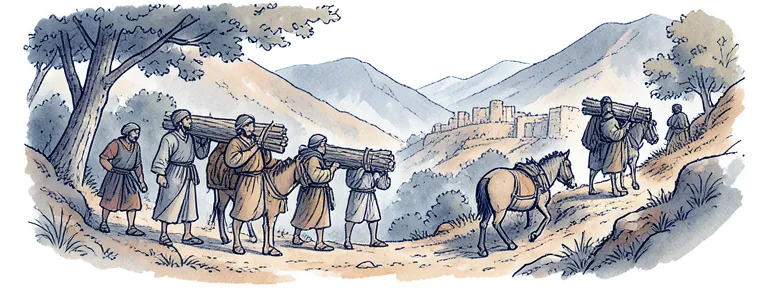
Four short messages in 520 BC stir the returned exiles to stop building up their own houses and rebuild God’s temple.
Overview
Haggai’s four messages all fall within four months of 520 BC, the second year of the Persian king Darius I (1:1). Some eighteen years earlier the first exiles had come home from Babylon and begun rebuilding the temple, but the work had stalled. The people say, “The time hasn’t yet come” (1:2), and Haggai asks, “Is it a time for you yourselves to dwell in your paneled houses, while this house lies waste?” (1:4). Their poor harvests, he says, are the result: “You have sown much, and bring in little” (1:6).
Unusually for a prophet, Haggai is heeded. Within about three weeks the governor Zerubbabel, the high priest Joshua and “all the remnant of the people” are at work (1:14). When the older people compare the new building with Solomon’s temple and find it “as nothing” (2:3), Haggai promises, “The latter glory of this house will be greater than the former” (2:9). A priestly ruling on what is clean and unclean follows, with a promise of blessing from that day. The book ends with God choosing Zerubbabel as his signet ring, the seal a king used to stamp his authority (2:23).
Author and date
The book reports Haggai’s words in the third person, each with an exact date. Ezra 5:1 and 6:14 name Haggai and Zechariah as the prophets who urged the rebuilding.
Traditional view
Haggai recorded his own messages, or a close follower did so at the time. The narrative is brief and the dates precise, which fits a record made while the events were fresh.
Academic view
Most academic scholars accept that the messages come from Haggai in 520 BC. They see the dates and the narrative framework as the work of an editor, perhaps writing soon afterwards, who may also have shaped Zechariah 1–8.
Both views date the messages to 520 BC and link them with the rebuilding described in Ezra 5–6. The temple was finished in 515 BC (Ezra 6:15).
Audience and setting
Haggai spoke to the community in Jerusalem and Judah, a small province of the Persian empire, and to its two leaders: Zerubbabel, a grandson of King Jehoiachin, and Joshua the high priest. They had come home to ruins, poor harvests and hostile neighbours, and the house of God was still a building site.
Genre, and how to read it
Haggai is tenth in the Twelve, the shorter prophets gathered on one scroll in the Hebrew Bible, and the first of the three from after the exile. Its dates give it a clear shape: four messages, each opening with a date. The work begins on the twenty-fourth day of the sixth month (1:15), and the twenty-fourth day of the ninth month becomes the day from which God promises blessing (2:18).
- 1:1 Sixth month, first day
- 2:1 Seventh month, twenty-first day
- 2:10 Ninth month, twenty-fourth day
- 2:20 The same day
The book is practical, but its last words look further ahead. God promises to “shake the heavens, the earth, the sea, and the dry land” (2:6) and fill the house with glory, words Hebrews 12:26 applies to the final shaking of creation. The choice of Zerubbabel as a signet ring reverses Jeremiah 22:24, where God says he would pull the signet ring off the hand of Zerubbabel’s grandfather. Later readers heard in it a hope for the line of David.
In the reign of Darius
Work on the temple stopped until the second year of the reign of Darius
(Ezra 4:24), and that is the year both prophets date their words. Haggai’s five messages fall within four months; Zechariah starts between them and goes on two years longer. Ezra dates the end: the house finished in Darius’ sixth year.
-
year 2 · month 6 · day 1
Build the house
Is it a time for you yourselves to dwell in your paneled houses, while this house lies waste?
Hag 1:1 -
year 2 · month 6 · day 24
Work begins
they came and worked on the house of Yahweh of Armies
Hag 1:15 -
year 2 · month 7 · day 21
The latter glory
The latter glory of this house will be greater than the former
Hag 2:1 -
year 2 · month 8
Return to me
Return to me
Zech 1:1 -
year 2 · month 9 · day 24
From today, a blessing
From today I will bless you
Hag 2:10 -
year 2 · month 9 · day 24
Zerubbabel, a signet ring
will make you like a signet ring, for I have chosen you
Hag 2:20 -
year 2 · month 11 · day 24
Visions in the night
I had a vision in the night
Zech 1:7 -
year 4 · month 9 · day 4
Should we still fast?
Should I weep in the fifth month
Zech 7:1 -
year 6 · Adar · day 3
The house is finished
This house was finished
Ezra 6:15
Dates as the text gives them, by year of Darius, month and day. Zechariah 1:1 gives no day, so its mark fills the month. Haggai 2:20 gives only the day; “the second time” puts it on the same day as 2:10, and they share a mark. Darius’ second year is 520 BC, and the house was finished in 515.
Outline
- 1:1–1:11 Consider your ways — The house lies waste, and the harvests fail
- 1:12–1:15 The people obey — Leaders and remnant begin work
- 2:1–2:9 The latter glory — Be strong and work, and the house will be filled with glory
- 2:10–2:19 Clean and unclean — A priestly ruling, and blessing from this day on
- 2:20–2:23 Zerubbabel — The nations shaken, and a signet ring
Key themes
- Priorities
- Twice Haggai tells the people, “Consider your ways” (1:5, 1:7), setting their panelled houses against God’s ruined one (1:4).
- God with them
- The promise that gets the work moving is short: “I am with you” (1:13). It returns with the call to “be strong” (2:4).
- Glory and peace
- The modest new temple will outshine the old, and “in this place I will give peace” (2:9).
- Holiness and uncleanness
- Haggai puts two questions about holiness and uncleanness to the priests (2:12–13), and applies their answers to a people whose offerings were tainted while the temple lay neglected (2:14).
- The line of David
- God calls Zerubbabel “my servant” and says, “I have chosen you” (2:23). The Covenants page follows the promise to David’s line.
At a glance
Most mentioned: Haggai, Zerubbabel, Josedech, Joshua, Shealtiel
Main places: Egypt