Malachi
In a series of arguments with a weary people, God defends his love, calls priests and people back to faithfulness, and promises a messenger before his day.
Overview
Malachi opens with God’s declaration, “I have loved you” (1:2), and the people’s reply, “How have you loved us?” The whole book proceeds this way, in six disputes where God makes a claim, the people question it and God answers. Priests offer blind, lame and sick animals they would never dare present to the governor (1:8). Men break faith with “the wife of your youth” (2:14) and marry “the daughter of a foreign god” (2:11). The people rob God “In tithes and offerings” (3:8) and say, “It is vain to serve God” (3:14).
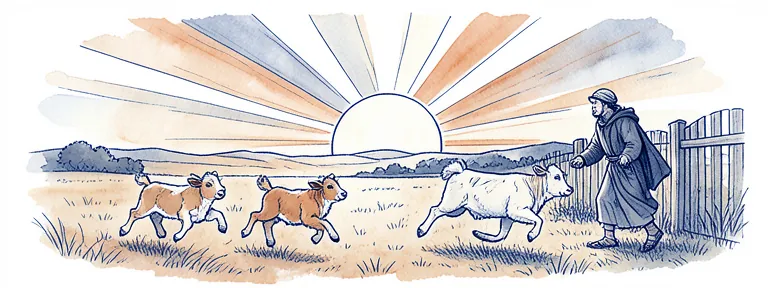
Into this tired worship God promises to come: “Behold, I send my messenger, and he will prepare the way before me!” (3:1). He will purify the priests “as a refiner and purifier of silver” (3:3), and a “book of memory” is written for those who fear him (3:16). For them “the sun of righteousness” will rise “with healing in its wings” (4:2). The book closes by pointing back to the law of Moses and forward to Elijah. He will come “before the great and terrible day of Yahweh” (4:5) to turn the hearts of fathers and children to each other (4:6).
Author and date
The heading gives the book to Malachi (1:1), but the name means “my messenger,” and it is uncertain whether it is a personal name or a title.
Traditional view
A prophet named Malachi spoke in the generation of Ezra and Nehemiah, whose reforms tackled the same problems: neglected tithes, careless priests and marriage to worshippers of other gods. One Jewish tradition, found in the Targum (an ancient Aramaic translation of the Bible), identifies him with Ezra himself.
Academic view
Many scholars read “Malachi” as a title drawn from “my messenger” in 3:1. They note that the heading “A revelation, Yahweh’s word” (1:1) closely matches the headings of Zechariah 9 and 12. They see the three as anonymous collections placed at the end of the Twelve, the shorter prophets gathered on one scroll in the Hebrew Bible. On this view Malachi was made a separate book to bring the number to twelve.
Both views date the book after the temple was rebuilt in 515 BC, when sacrifices were again offered under a Persian governor, and most place it in the decades around Nehemiah’s time.
Audience and setting
Malachi spoke to the community in Judah perhaps two generations after the return from exile. The temple stood and the sacrifices had resumed, but the great promises of Haggai and Zechariah had not visibly come true. Harvests were poor (3:11), priests were cutting corners, and many had begun to ask whether serving God made any difference (3:14).
Genre, and how to read it
Malachi is the last book of the Twelve, and in the Hebrew Bible the Twelve close the section called the Prophets. In Christian Bibles it is the last book of the Old Testament, and its promise of Elijah leads into the Gospels, where Jesus identifies John the Baptist as the Elijah who was to come (Matthew 11:14).
- 1:2 “How have you loved us?”
- 1:6 “How have we despised your name?”
- 2:10 “Why do we deal treacherously”
- 2:17 “How have we wearied him?”
- 3:6 “How shall we return?”
- 3:13 “What have we spoken against you?”
The six disputes give the book its structure, and each opens with a statement from God and an objection from the people. English Bibles have four chapters and Hebrew Bibles three; the World English Bible’s chapter 4 is Hebrew 3:19–24. In Jewish reading the second-to-last verse (4:5) is repeated after the last, so that the book does not end on the word “curse.”
The day of Yahweh
“The day of Yahweh”, the day God comes in judgement, is named 16 times in the Old Testament, every one of them in the prophets, and 5 of them in Joel. Again and again it is near
or at hand
. Amos turns the hope on its head, telling those who long for it that it is darkness, and not light
.
- Isaiah 2
- Ezekiel 1
- Joel 5
- Amos 3
-
Obadiah 1
- 1:15
the day of Yahweh is near all the nations
- 1:15
- Zephaniah 3
-
Malachi 1
- 4:5
the great and terrible day of Yahweh
- 4:5
Counted in the site’s Hebrew as yom followed by the divine name. The hollow marks are the Hebrew’s a day for Yahweh, a different turn of phrase that the WEB also renders as Yahweh’s day. Malachi’s is the last in the Old Testament, with Elijah sent before it; at Pentecost Peter quotes Joel’s, before the great and glorious day of the Lord comes
(Acts 2:20).
Outline
- 1:1–1:5 I have loved you — The example of Jacob and Esau
- 1:6–2:9 Priests who despise God’s name — Blemished sacrifices, and the covenant with Levi
- 2:10–2:16 Faithlessness — Marriage to worshippers of other gods, and divorce
- 2:17–3:5 Where is the God of justice? — The messenger, and the refiner’s fire
- 3:6–3:12 Return to me — Robbing God, and the windows of heaven
- 3:13–4:3 Is it vain to serve God? — The book of memory, and the day that burns like a furnace
- 4:4–4:6 Moses and Elijah — Remember the law, and watch for the prophet
Key themes
- God’s love
- The book begins with “I have loved you” (1:2) and argues from there. Paul cites the Jacob and Esau lines in Romans 9:13.
- Honouring God
- “If I am a father, then where is my honor?” (1:6). Careless worship in Jerusalem is set against a day when God’s “name is great among the nations” (1:11).
- Faithfulness
- “Don’t we all have one father? Hasn’t one God created us?” (2:10). Faithlessness to God and faithlessness in marriage belong together (2:14–16).
- The messenger
- God will send a messenger to prepare his way (3:1). Mark opens his Gospel with this verse and applies it to John the Baptist (Mark 1:2).
- Law and prophet
- “Remember the law of Moses my servant” (4:4), and look for Elijah (4:5). The Covenants page follows the covenant made at Horeb.
At a glance
Most mentioned: Esau (Edom), Jacob (Israel), Levi (patriarch), Jesus Christ, Elijah
Main places: Jerusalem, Edom, Horeb, Mount Sinai